Please note: While we live and breathe Non-QM, we know the bigger picture matters. This update looks at the broader mortgage market because what’s happening out there impacts everyone—borrowers, brokers, and lenders alike.
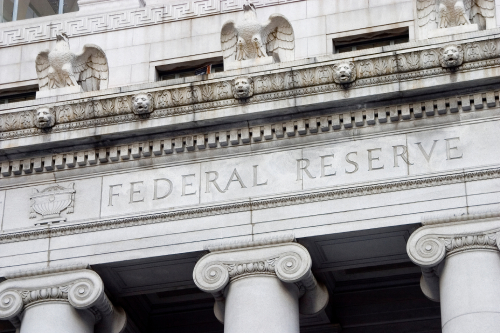
The Federal Reserve raised its benchmark interest rate by 25 basis points this week, bringing the federal funds target range to 3.75%–4.00%. But despite the hike, longer-term Treasury yields initially showed a relatively contained reaction.
For mortgage brokers, that highlights an important distinction:
A Fed rate hike does not automatically mean mortgage rates rise by the same amount—or even move in the same direction.
With the 10-Year Treasury once again approaching 5.00%, mortgage rates near 7%, and economic growth remaining resilient, here’s what brokers should understand about the Fed’s latest move and what could matter next.
The Fed Raised Rates. What Does That Actually Mean for Mortgages?
The Federal Reserve raised the federal funds rate by 25 basis points at its September meeting, its first increase since 2023. The Fed said economic activity continues to expand at a solid pace while inflation remains elevated.
But the federal funds rate is not a mortgage rate.
The Fed’s benchmark has a more direct influence on short-term borrowing costs, including certain credit cards, HELOCs and other variable-rate products.
Thirty-year mortgage rates operate differently.
They are influenced by the longer end of the bond market—particularly mortgage-backed securities and Treasury yields—along with inflation expectations, economic growth, investor demand and the spread between mortgage rates and Treasury yields.
That’s why the Fed can raise rates without mortgage rates immediately following it higher.
We’ve seen the reverse happen, too. When the Fed began its easing cycle with a 50-basis-point cut in September 2024, longer-term Treasury yields subsequently moved higher rather than simply following the Fed down.
Broker takeaway: When borrowers ask, “The Fed raised rates—does that mean my mortgage rate just went up?” the answer is more nuanced. Fed policy matters, but the bond market is often more important to the mortgage rate available to a borrower.
Could a Fed Hike Eventually Help Longer-Term Rates?
There’s another reason the bond market’s reaction matters.
Inflation is particularly important to long-term bonds because rising prices reduce the future purchasing power of their fixed payments.
If bond investors believe the Fed is serious about bringing inflation back toward its 2% objective, tighter monetary policy could potentially reduce some of the longer-term inflation risk investors price into bonds.
The Fed explicitly cited elevated inflation and its goal of returning inflation to 2% when announcing this week’s increase.
That doesn’t mean a Fed hike will cause mortgage rates to fall.
It does mean the relationship between Fed hikes and mortgage rates isn’t as simple as “up means up.”
Broker takeaway: Instead of trying to predict mortgage rates based solely on the Fed’s decision, watch how the 10-Year Treasury and mortgage-backed securities respond to the Fed’s broader message about inflation and economic growth.
Strong Consumer Spending Complicates the Picture
Inflation isn’t the only thing the bond market is watching.
The economy continues to show resilience.
August retail and food-services sales increased 1.2% from July and 6.0% from a year earlier, according to the U.S. Census Bureau.
That’s relevant to mortgage rates because stronger economic activity can create a challenge for bonds.
Bond investors may welcome signs that the Fed is committed to controlling inflation. At the same time, resilient consumer spending and stronger economic growth can reduce expectations for easier monetary policy and contribute to upward pressure on longer-term yields.
For brokers, this is why one economic report rarely tells the entire rate story.
Broker takeaway: Strong economic data can be good news for the economy without necessarily being good news for mortgage rates. In today’s market, signs of continued strength can keep pressure on longer-term Treasury yields.
Why Everyone Should Be Watching 5.00%
One of the most important numbers for mortgage professionals right now isn’t the federal funds rate.
It’s 5.00% on the 10-Year Treasury.
The 10-Year has once again moved close to that level.
Why does 5.00% matter?
First, it’s an important psychological and technical level for the bond market. When the 10-Year briefly reached approximately 5% in 2023, yields subsequently reversed lower.
Higher yields can also eventually attract additional investors looking for income. More demand for Treasury securities can help stabilize bond prices and yields.
But there’s no guarantee that happens again.
If the 10-Year establishes itself above 5%, the market could enter a new trading range—and that could create additional pressure on mortgage rates.
What 5% Could Mean for Mortgage Rates
This is where the Treasury market becomes especially relevant to brokers.
Mortgage rates typically trade at a spread above the 10-Year Treasury yield. That spread isn’t fixed—it can expand or contract depending on volatility, investor demand, prepayment expectations and conditions in the mortgage-backed securities market.
But the relationship gives brokers a useful framework for understanding the market.
With the 10-Year Treasury approaching 5% and the average 30-year fixed mortgage rate already at 6.95% as of September 17, we’re seeing how elevated Treasury yields can translate into higher borrowing costs for homebuyers.
Broker takeaway: You don’t need to become a bond trader. But watching the 10-Year Treasury can give you valuable context for why mortgage pricing is moving—even when the Fed hasn’t made another move.
Where Mortgage Rates Stand
As of September 17, Freddie Mac reported the average 30-year fixed mortgage rate at 6.95%.
That puts mortgage rates close to the 7% threshold at the same time the 10-Year Treasury is testing another important level.
For borrowers, those movements can affect purchasing power and qualification.
For brokers, they can make loan structure increasingly important.
A borrower who becomes difficult to qualify because of higher payments may not necessarily be out of options. For self-employed borrowers, real estate investors, asset-heavy borrowers and others who don’t fit traditional agency guidelines, a different qualifying approach may provide another path.
What This Means for Your Pipeline
The biggest mistake brokers can make after a Fed meeting is waiting for the market to tell them what to do.
Instead, use the volatility to create conversations.
Educate borrowers instead of predicting rates. Explain why the Fed’s decision doesn’t translate directly into an equivalent change in their mortgage rate.
Keep pre-approved borrowers engaged. If the 10-Year finds resistance near 5% and yields retreat, mortgage pricing could create opportunities quickly.
Revisit scenarios affected by qualification. When higher rates push a conventional borrower outside the box, determine whether a different loan structure or Non-QM solution could address the actual qualification challenge.
Focus on the borrower, not just the rate. Waiting for a dramatically lower rate isn’t always the only solution. Sometimes the qualifying strategy is what needs to change.
What Brokers Should Watch Next
With the Fed meeting behind us, attention shifts back to economic data and the Treasury market.
Upcoming reports include New Home Sales, Durable Goods Orders and Consumer Sentiment. Stronger-than-expected economic data could reinforce the resilient-growth narrative, while softer reports could provide some relief to bonds.
Treasury auctions will also be worth watching.
With yields already elevated, investor demand for new Treasury supply could offer another indication of whether buyers are becoming more willing to step in at these levels.
And above everything else, keep watching the 10-Year Treasury near 5.00%.
The Bottom Line for Mortgage Brokers
The Fed raised rates, but the lesson for brokers isn’t simply that borrowing costs are going higher.
It’s that the Fed and mortgage rates don’t move in lockstep.
The Fed controls a short-term benchmark. Mortgage rates are much more closely connected to what happens in longer-term bond markets.
Right now, that makes the 10-Year Treasury’s battle around 5% one of the more important developments for mortgage professionals to watch.
Rather than trying to predict exactly where rates go next, brokers can use this environment to educate borrowers, keep their pipelines engaged, and look for alternative structures when higher rates make traditional qualification more difficult.
Have a scenario that needs another look?
Submit Your Scenario Today
The material contained in this newsletter has been prepared by an independent third-party provider. The content is provided for use by real estate, financial services and other professionals only and is not intended for consumer distribution. The material provided is for informational and educational purposes only and should not be construed as investment and/or mortgage advice. Although the material is deemed to be accurate and reliable, there is no guarantee it is without errors.